Aave connects to MetaMask Agent Wallet
The October 9 announcement connects Aave’s transaction tools to MetaMask Agent Wallet. Developers can build agents that monitor lending markets and act within wallet permissions.
 BTC
$59,320.01
-1.07%
 ETH
$1,646.39
-1.08%
 WLFI
$0.0170
-52.38%
 SOL
$70.45
-1.77%
 ZEC
$718.06
-2.71%
 U
$1.00
-0.04%
 PORTAL
$0.0149
-63.64%
 XRP
$0.9396
-0.99%
 BNB
$552.05
-0.53%
 EVAA
$2.69
+97.96%
 RWUSD
$1.00
+0.01%
 NEAR
$2.96
-1.85%
 HYPE
$62.66
-1.56%
 TRUMP
$0.7540
-14.12%
 TRX
$0.2997
-0.37%
 UNI
$4.69
-3.04%
 DOGE
$0.0567
-1.89%
 PEPE
$0.00000338
-4.79%
 SUI
$0.6545
-2.86%
 LTC
$43.75
-3.08%
All our coverage of DeFi, together. Choose a publication type below to narrow your reading.
The October 9 announcement connects Aave’s transaction tools to MetaMask Agent Wallet. Developers can build agents that monitor lending markets and act within wallet permissions.
BNB Chain stablecoin holders have another route into Aave App. The announcement includes a waitlist access code, while Android and web users remain on a waiting list.
Crypto Loan brings stablecoin borrowing against cbBTC and wBTC, Ethereum-based representations of Bitcoin, into Ledger Wallet through Morpho and Yield.xyz.
Blockchain transactions are visible, but the risks behind a vault’s investment strategy can be harder to judge. S&P’s new service aims to narrow that information gap.
Aave’s community governs the protocol without controlling all of the legal assets around it. A proposed independent foundation would address that gap, with no board seat or appointment rights for Aave Labs.
Easy entry does not guarantee a quick exit. We inspect Lido’s public screens and calculate how transaction costs can change the decision for a small ETH position.
The attacker repaid debt to release collateral before taking the remaining funds. Researchers traced the flaw to authorization checks in an external module built on top of Aave.
Quote.Trade’s latest release focuses on keeping trading strategies private while showing the full execution price upfront. Visible on-chain collateral does not mean that matching and risk management also take place on-chain.
Ethereum holders have a new route into Aave App. The stablecoin deposit update comes with an access code for waitlisted users, but does not amount to a general release across all platforms.
A quoted amount is only part of a swap. An actual Uniswap screen and a worked cost comparison show what to check before signing and how to confirm what arrived.
A stablecoin returning to $1 does not necessarily reverse a lending loss. Dated USDC records and reproducible stress calculations show where temporary price changes can become lasting shortfalls.
Explore pool selection, price ranges and withdrawal through a documented Uniswap v3 example. A worked comparison separates fee income from performance against holding the original tokens.
AlphaFi is winding down on Sui after an oracle configuration issue. New deposits and borrowing have stopped, while existing users can still withdraw their assets.
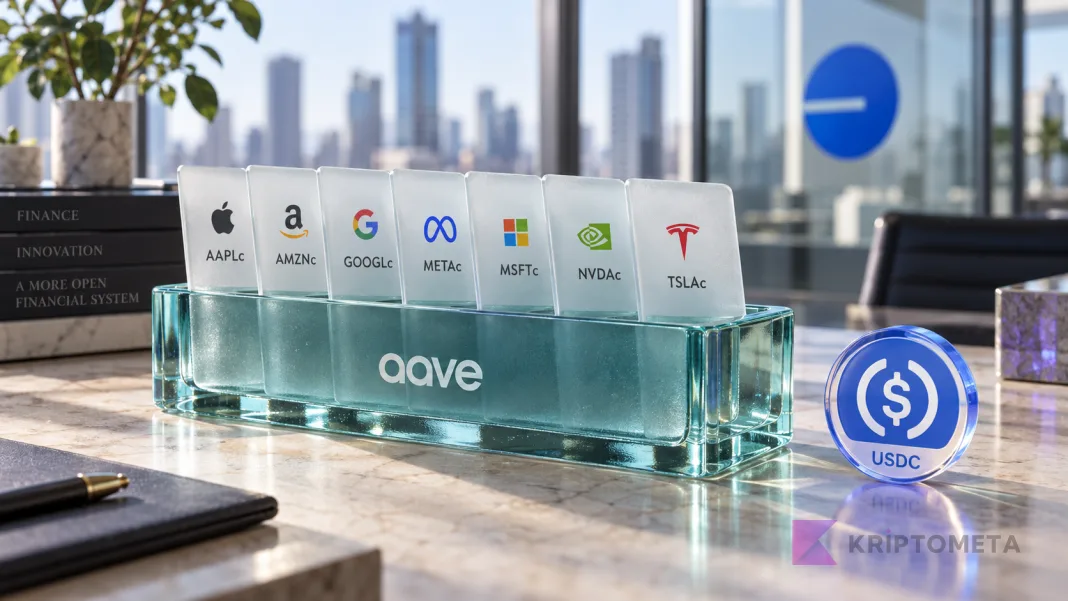
Tokenized shares including Apple and Nvidia have become borrowing collateral on Aave. The credit market runs around the clock, but its stock-price feeds operate on a more limited schedule.
This Lido analysis uses the H1 2026 report to examine the path from staked ETH to fee revenue and LDO rights. Shared-pool economics and a tokenholder’s claim are evaluated separately.
Comparing liquid staking with solo staking on Ethereum starts with control and the route back to ETH. Reward rates need to be read alongside expenses, queues and executable token prices.
We inspected PancakeSwap’s swap screens without connecting a wallet on September 27, 2026. Network and token selection and expanded quote details were accessible; execution, signing and security testing remain outside the review.
Your first DeFi decision is what you want your assets to do. Swapping, supplying a lending pool and providing liquidity create different obligations; choosing a route means budgeting for the way out as well as the way in.
We inspected Aave V3 Core without connecting a wallet. Real USDC reserve screens separate rates, liquidity and collateral limits, with clear boundaries around what was not tested.
Collateral prices are only part of DeFi borrowing risk. Work through changes in debt, repayment choices and the limits of alerts with explicit numerical assumptions.