










Crypto glossary
What is a DAO?
 KriptoMeta Editorial Team
- Added:
- Updated:
A DAO, or decentralized autonomous organization, is a way for a community to coordinate decisions and resources around a shared purpose using defined rules. Proposals, voting rights and smart contracts can form part of that arrangement.
What does the DAO label not guarantee?
Autonomous does not mean every task happens without human involvement. Some DAOs execute approved transactions through contracts; others depend on signers who control a treasury account. Permissions, voting power and execution rules determine how the organization actually works.
A DAO does not necessarily give everyone an equal vote or involve every member in every decision. Membership can depend on tokens, shares or a reputation earned through contributions. Holding a token is not the same as having every permission required to implement a decision.
Example
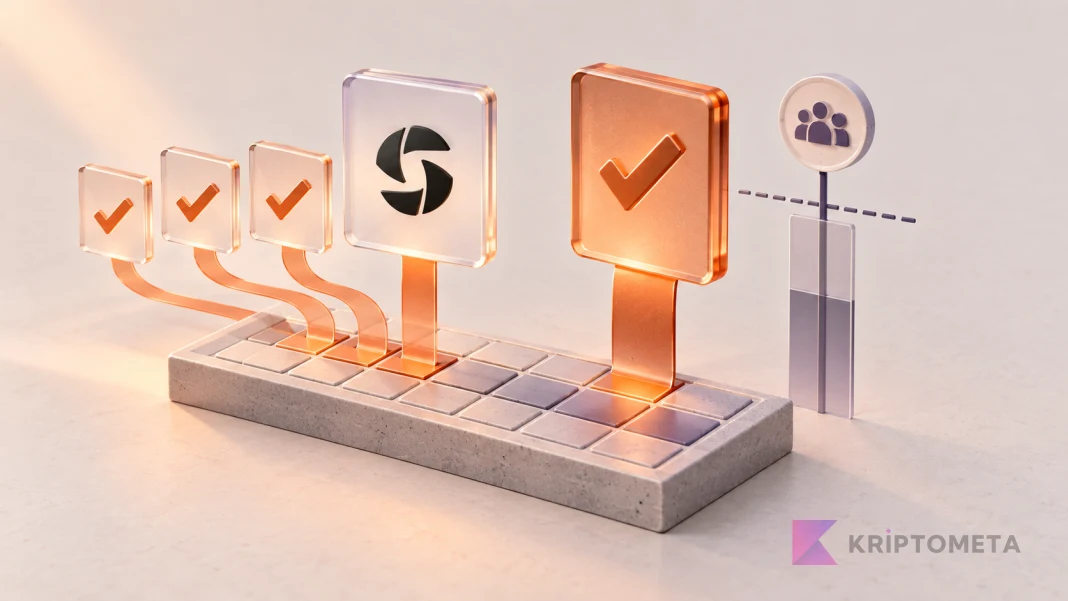
Suppose an education DAO votes to allocate a budget worth $2,000 to one of two proposed courses. Members choose course A and meet the required participation and approval thresholds. If its treasury requires three signatures, the funds move only after those signatures are collected. The vote establishes the collective decision; the signing arrangement defines execution authority.
The real proposal in our Snapshot review shows why a voting result and an execution record must be read separately.
The DAO decision-making analysis assesses vote distribution separately from the authority to carry out an approved decision.
Keep exploring