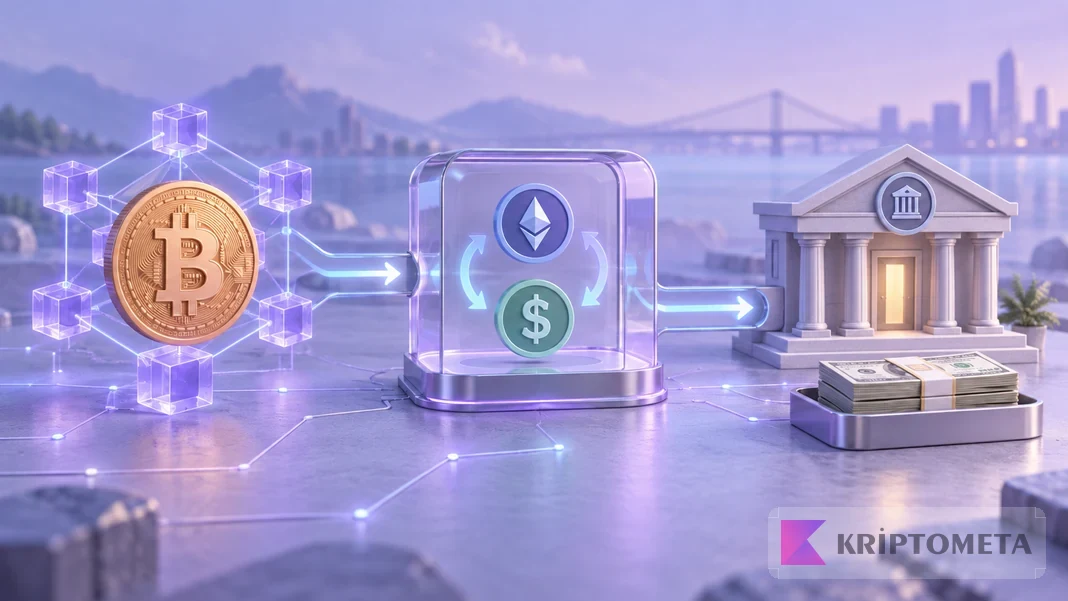














Crypto assets traded on an exchange do not all serve the same payment or application functions. Comparing their uses means looking separately at network costs, supported transactions and the rights an asset actually provides.
This guide asks what a crypto asset does, rather than which coin to buy. A short definition of cryptocurrency and an explanation of its practical uses answer different questions.
Which use fits which need?
Two assets in the same wallet may perform different jobs. Transferring one token can require a second asset to pay the network fee.
| Purpose | Example | What to check first |
|---|---|---|
| Value transfer | Sending BTC between wallets | Address, network and total transfer cost |
| Network fees | Paying Ethereum gas in ETH | Enough ETH to cover the fee |
| DeFi application | Swapping supported assets or providing collateral | Contract, price and liquidity risks |
| Digital items or governance | Using a token for an application’s defined functions | The rights the token actually provides |
Moving value between wallets
Networks such as Bitcoin allow value to move from one address to another. As Bitcoin’s transaction explanation describes, a wallet signs a transaction using a private key; the network verifies and records it. The recipient does not need the same wallet brand, but must support the relevant asset and network.
The displayed transfer amount is only part of the calculation. Network fees, a platform’s withdrawal charge and the cost of converting the asset into another currency are separate considerations. Crypto transfers are therefore not automatically free or cheaper than other methods.
For a Bitcoin transfer, the Bitcoin transaction fee calculator estimates the network cost from transaction size and fee rate. An exchange’s withdrawal charge is separate. The cryptocurrency converter shows the approximate value of your transfer amount in another currency; that value does not include transfer fees.
A stablecoin transfer typically moves an asset designed to track a reference value such as the dollar. Stablecoin designs differ, and maintaining that value is not guaranteed. Completing a token transfer also does not mean fiat money has arrived in the recipient’s bank account.
Paying network fees
One direct use of a crypto asset is paying for network resources. On Ethereum, transaction fees are paid in ETH. Sending tokens or interacting with an application can consume resources and incur a fee. The calculation is described in Ethereum’s gas documentation. The Ethereum gas fee calculator estimates the transaction cost in ETH and US dollars.
Example: Suppose your wallet holds a stablecoin on Ethereum but no ETH. The stablecoin balance alone does not cover gas for an ordinary transfer. Applications that sponsor fees use an additional mechanism; you should not assume every wallet offers it.
DeFi: swaps and collateral
Decentralized finance applications let users swap supported assets or, in some protocols, provide collateral to borrow other assets. Transactions follow the application’s smart contract rules. These DeFi uses go beyond moving a balance between addresses.
Being able to perform an action does not make its outcome safe. Contract vulnerabilities, falling asset prices, limited liquidity and collateral liquidation can cause losses. A website accepting a wallet connection is not evidence that the application is trustworthy or endorsed by us.
Digital items and governance
Some applications use crypto assets to acquire digital collectibles or perform specific in-app actions. An NFT can represent an item’s record on a blockchain. As the NFT model illustrates, that record is distinct from the media file and the legal rights attached to it. Ownership of a token does not by itself establish copyright or an unrestricted licence.
Other projects use tokens to vote on protocol changes or shared resources. DAO governance is one example. Voting power and participation rules vary; holding a token does not automatically make someone a shareholder in a company.
What should you check before paying a merchant?
Start with the merchant’s accepted asset and network, then read the payment request. For a hypothetical $50 invoice payable in BTC, the requested BTC amount depends on the quoted exchange rate. Check how long that quote remains valid and whether the payment includes or excludes your network fee. Sending an arbitrary dollar-equivalent amount is not the same as satisfying the merchant’s payment request.
Refund terms deserve a separate check: will a refund be calculated from the dollar invoice or from the crypto amount originally sent? Those amounts can diverge when the price moves. Confirm the merchant’s terms before paying rather than assuming every provider follows the same policy.
Acceptance and legal permission are separate checks. A checkout offering crypto does not establish that the payment is permitted for every customer or location. Check the rules applicable to your transaction and the service’s country restrictions.
As uses evolve, crypto news coverage can help you spot new services and regulatory announcements. Check the service terms to establish whether the reported access applies in your country.
What should you check before using crypto?
- Asset versus network: The same token name can appear on networks with different transfer requirements.
- Transfer versus cash withdrawal: Receiving tokens in a wallet and receiving money in a bank account are separate processes.
- Utility versus investment: A useful function does not guarantee that a token’s price will rise.
- Amount versus total cost: The amount sent may differ from the total balance needed to complete the transaction.
Start by identifying the job: transferring value, paying a network fee or using a specific application feature. That makes it easier to assess a token’s practical function separately from its price movements.